Overview || Managing Public Relations During a Crisis
Fall Seminar-December 2017
The reputation of your business or organization is one of your greatest assets. How you respond to a crisis can turn an emergency into a long-term disaster for your business.
If a crisis occurs, does you organization have a designated public information officer
Do you have public relations and social media plans and policies in place
How (and what) should you communicate with your employees, board members, customers, news media, and the general public
With support from Wisconsin Emergency Management, DRCV offered this free seminar on private-sector communications and public relations during a crisis, including a mock cyber-attack scenario to explore strategies of how an organizations might respond to such a crisis.
Lessons Learned
In a vacuum of reliable information, the public will make up its own information to fill the void. Early in a crisis, it is okay to start with basic, short messages to fill this void. Provide more information and details later once you better understand circumstances
Provide a single, consistent, and truthful message from a trusted source. Be empathetic and don't displace blame. You may have a different spokesperson for different audiences (e.g., press/public, employees, social media, board of directors).
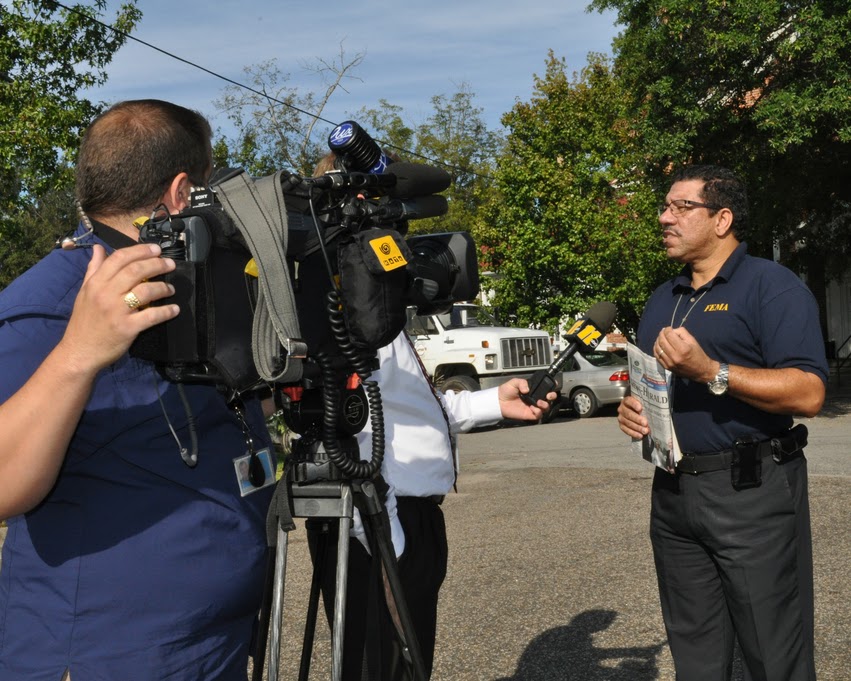
Have a single point-of-contact for media and public relations. The best person to be your public information officer (PIO) is not always the highest "ranking" person in your organization. PIO training is available through FEMA
Social media can be very beneficial during a crisis, but can also create new problems. Have a social media policies. Identify a person (and a back-up person) dedicated to using and monitoring social media for your organization
Be proactive. Develop a crisis communications/P.R. plan. Have press release templates that can be quickly customized during a crisis. Meet your local media contacts now and have their contact information up-to-date
Be organized before accepting donations and volunteers. There can be liabilities involved. It is okay to not accept volunteers on Day 1 after a crisis
Be smart and pick your "battles", when it comes to public relations. Can't respond to everyone poor social media review, etc. There is a difference between an issue and a crisis
Depending on the crisis, the press appreciates pictures or a safe location from which pictures can be taken
Lisa Olson-McDonald, WI Emergency Mgmt Regional Director
Jon Schultz, Eau Claire Fire Department
Jenny Legaspi, American Red Cross
Terri Leece, The Salvation Army
Kelli Engen, Eau Claire Public Health & County Medical Reserve Corp
William Kraft, Eau Claire County ARES/RACES
Brian Kaczmarski, Western WI Public Health Readiness Consortium
With support from Wisconsin Emergency Management, DRCV offered this free seminar on private-sector communications and public relations during a crisis, including a mock cyber-attack scenario to explore strategies of how an organizations might respond to such a crisis.
Lessons Learned
Businesses and non-profit organizations are crucial to community recovery following a disaster. Your resources will be needed by residents, other businesses, and the public sector
All disasters start and end locally. Wisconsin is a "home rule state", which means that your local city, village, or town has ultimate responsibility to prepare, respond, and recover, typically with assistance from your County Emergency Management office. Additional support from the State can be requested if needed.
If you have potential resources that may be needed, contact your local unit of government, County Emergency Management office, and/or the Red Cross and Salvation Army. But don't wait until disaster strikes! Make these contacts now.
A disaster, such as flooding, can be devastating for a community, but may not impact a large enough area to warrant a federal disaster declaration. This can leave impacted communities, businesses, and residents with fewer financial resources for recovery. Your support can make a huge difference during such events. But, following the disaster, don't send volunteers, goods, or other items until they are requested
Businesses should encourage employees to be prepared at home and may want to consider developing policies that will allow employees to volunteer time should disaster strike. Ongoing volunteer opportunities are available, such as the Eau Claire County Medical Reserve Corps (which is NOT just about medical care), Red Cross Disaster Action Teams, Salvation Army, and local volunteer fire and EMS departments
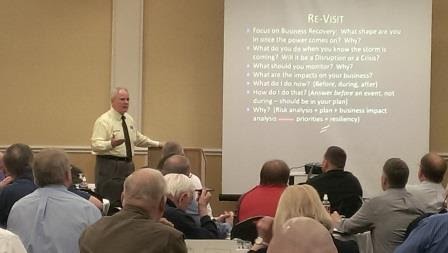
Thank you to everyone who attended the Critical Infrastructure and Business Recovery after a Long-Term Power Outage Workshop on May 15, 2014
Special thanks go out to all of our speakers and the project assistance received from the planning team:
Disaster Ready Chippewa Valley Board of Directors
Mary Bauer, U.S. Department of Labor-OSHA
Jennifer Laack, Michael Jordan, & Lisa Olson-McDonald, Wisconsin Emergency Management
Chris Straight, West Central WI Regional Planning Commission
Dennis Brown, Chippewa County Emergency Management
Ben Bella, Eau Claire Energy Cooperative
The feedback from the 60 attendees was very positive. Knowledge of ice storm and power outage risks was gained, plans were discussed, and new partnerships were made.
Over 97% of the evaluations agreed or strongly agreed that DRCV's efforts to promote the disaster preparedness of businesses and organizations in the Chippewa Valley is important. We appreciate the support!
Lessons Learned
Businesses and organizations need to make sure their employees (and their employees' families) are prepared. If Employees are not prepared, they won't be available to help your business.
Your organization's management and leadership needs to be familiar with your emergency and continuity plans. Better yet, they should champion and be actively involved in plan development, testing, and evaluation
You need to know your key resources and who to call before the event occur. Communications and partnerships are vital